NUTRITIONAL SKILL
Weighing food with a kitchen scale
Place your plate, bowl or container on the scale.
Press ZERO/TARE so the scale reads 0.
Make sure the scale is set to grams (g).
Add your first ingredient and record the weight.
Press ZERO/TARE again before adding the next ingredient.
Repeat for each ingredient.
Weighing food from a jar or container
This is often easier and more accurate than trying to weigh what you add to your bowl.
Place the whole jar/container on the scale.
Press ZERO/TARE so it reads 0 g.
Remove the amount you want and add it to your meal.
Put the jar back on the scale.
The negative number shown is the amount you used.
Example: −18 g = 18 g used.This means you can lick the spoon or knife because everything taken out of the jar is yours.
Weighing salt
For very small amounts like salt, a micro scale that measures to 0.01 g is much more accurate than a standard kitchen scale.
WHY YOU SHOULD WEIGH EVERYTHING
Why weigh your food?
Cups, spoons, “1 slice”, “1 piece” and the serving size listed on a packet are estimates, not exact measurements. If you want to know what you are actually eating, weighing in grams is the most accurate and consistent method.
A few reasons this matters:
Serving sizes aren't always accurate. A packet might say “1 slice = 40 g”, but the slice you take out could actually weigh 35 g or 47 g.
Individual pieces vary. Bread slices, wraps, fruit, meat portions, protein bars and other foods aren't manufactured or portioned to exactly the same weight every time.
The weight stated on a meat packet is not necessarily what ends up in the packet.
Cups and spoons measure volume, not weight. How tightly something is packed, how full the spoon is and the shape or size of the food can substantially change how much you're actually eating.
Small differences can add up. Being 5–10 g out on several ingredients across multiple meals can create a much larger difference by the end of the day.
Simple rule: if you can weigh it, weigh it. Use the grams you actually measure, rather than assuming the suggested serving size or household measurement is correct.
every weight in your MYP meal plan is raw. Always Weigh your food before you cook it.
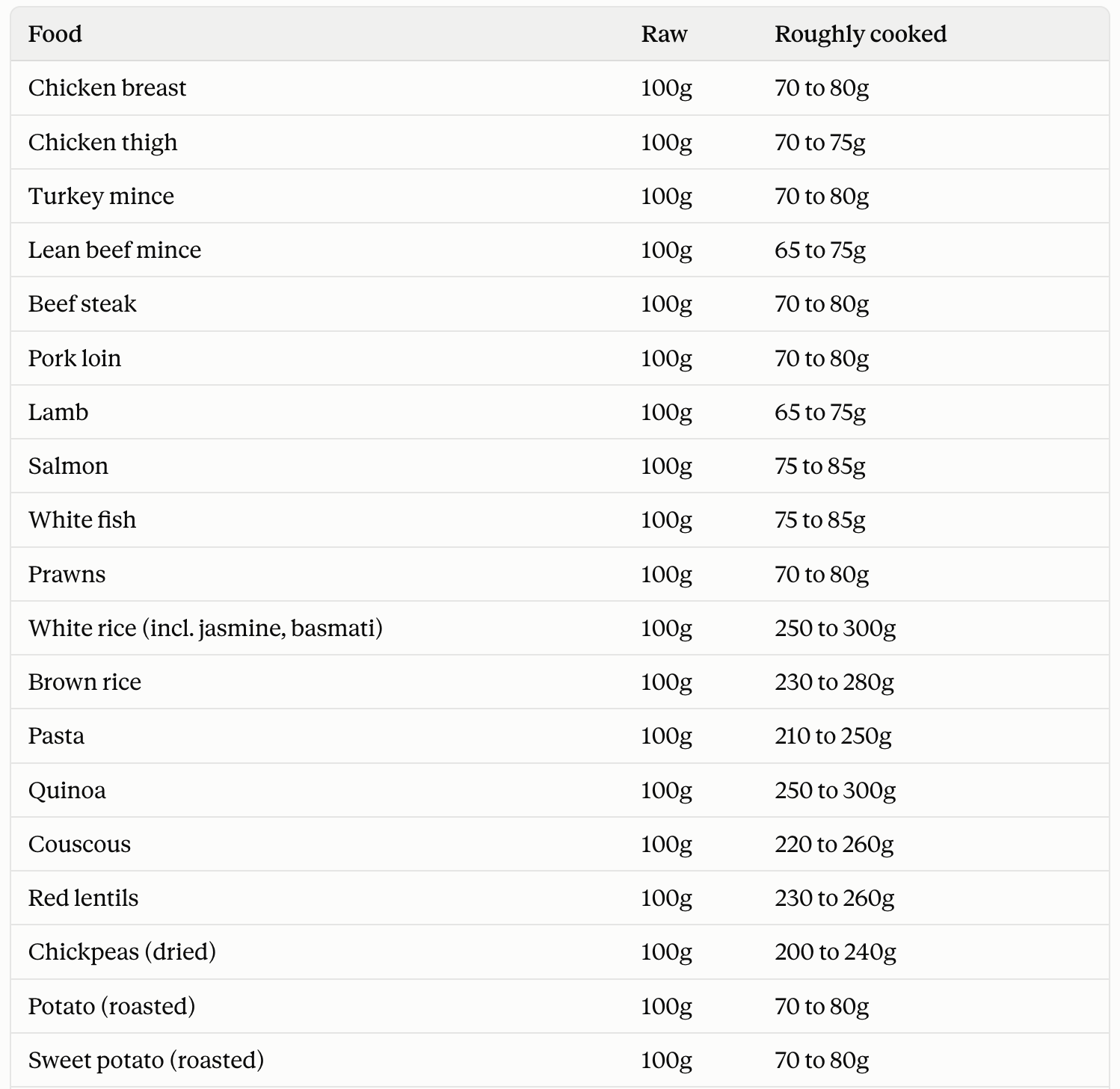
Why it matters: cooking doesn't change the calories or macros in your food. It changes the weight. Meat loses water and gets lighter. Rice and pasta soak up water and get heavier. So 100g of cooked chicken has more protein than 100g of raw chicken, and 100g of cooked rice has far fewer carbs than 100g of raw rice.
Rough guide (varies with the cut, the brand and how long you cook it):